Vaccinations and supplements

Vaccinations
It is advised that you ensure you are up to date with your vaccinations at least 3 months before conceiving. For more information, visit the NHS.UK website.
Some vaccines are recommended during pregnancy to protect the health of you and your baby.
During pregnancy, your immune system (the body’s natural defence) is weakened to protect the pregnancy. For more information, visit our web page: Vaccinations in pregnancy.
Supplements
Eating a healthy diet whilst you are trying to conceive will give you many of nutrients your body needs. However when planning to become pregnant, and during a pregnancy, there are recommended supplements to take.
Some women choose to take a pre-conception, or pregnancy multi-vitamin. If you choose to do this, it is important that the supplement is pre-conception or pregnancy specific. Other supplements will contain vitamin A and this is not recommended during pregnancy.
Whilst others may choose not to take a full supplement, it is recommended that you take folic acid and vitamin D before and during your pregnancy.
If you’re more than 10 weeks pregnant or have a child under 4, you may be entitled to get Healthy Start vitamins.
Folic acid
Folic acid helps to prevent neural tube defects such as spina bifida. The recommended dose is 0.4mg or 400 micrograms per day for at least 8 weeks before pregnancy and for up to 12 weeks into pregnancy.
A higher dose of 5mg per day is recommended if:
- you or your baby's biological father have a neural tube defect
- you or your baby's biological father have a family history of neural tube defects
- you have a BMI of more that 30
- you are taking anti-epileptic drugs
- you have a family history of fetal abnormalities
- you have diabetes
This dose should be prescribed by you doctor.
Foods that include folic acid
Folic acid in its natural form is called folate which are naturally present in:
- green leafy vegetables, such as broccoli and cabbage
- green beans
- oranges,
- chickpeas and brown rice.
- some breakfast cereals, margarine and bread have folic acid added, these are called 'fortified' foods.
Vitamin D
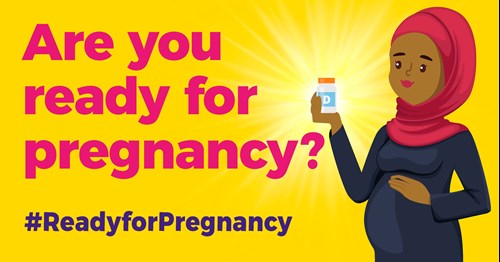
Vitamin D regulates the amount of calcium and phosphate in the body which are needed to keep bones and teeth healthy. Deficiency of vitamin D can cause children's bones to soften and can lead to rickets.
All adults, including pregnant and breastfeeding women, need 10 mcg of vitamin D each day. During the spring and summer months (April – September), most people get all the vitamin D they need from sunlight. However in the winter months (October – March), it is advised that vitamin D is taken as a supplement. This is something you can take whilst trying to conceive.
If you have dark skin, for example you or your family have an African, Caribbean or South Asian background, you may not get enough vitamin D from sunlight and should consider taking a supplement all year.
Foods that include Vitamin D
Vitamin D is made by your body when your skin is exposed to summer sunlight but it is also found in some foods, including:
- Oily fish (e.g salmon, mackerel, herring and sardines)
- Eggs
- Red meat